
Dry Needling
Maybe a doctor, trainer, or friend told you that “dry needling” could help your sore muscles, sports injury, or back pain. You may be wondering what it is — and whether it’s the same as acupuncture. Here’s the simple answer: yes, it basically is. Both use the same thin needles to calm down tight, painful muscles. The bigger question is who is doing it.
At Attunement Wellness in Portland, your treatment is done by Dr. Dani Brunner, a licensed acupuncturist with more than 3,500 hours of training and over ten years of experience helping thousands of people feel better.
Here’s the short version.
- Dry needling and acupuncture use the same tiny needles to ease muscle pain — they are really the same thing.
- What matters most is how much training the person holding the needle has had.
- Dr. Dani is a licensed acupuncturist with 3,500+ hours of training and over a decade of experience.
What Is Dry Needling?
When a muscle is overused or hurt, it can form a tight “knot” — a hard, tender spot that aches and limits how you move. Dry needling treats those knots.A trained practitioner gently places a very thin needle (about the width of a hair) into the knot. This helps the muscle relax, brings fresh blood to the area, and eases the pain. The needles are sterile and used once, then thrown away.The word “dry” just means nothing is injected through the needle — no medicine, no fluid. The needle itself does the work. People often use it for tight muscles, stiff joints, sports injuries, and aches from sitting at a desk all day.Is Dry Needling the Same as Acupuncture?
In plain terms — yes. Dry needling and acupuncture use the exact same needles and work in the same way. Acupuncturists have actually been needling sore, tender muscle spots for hundreds of years. “Dry needling” is just a newer name for part of what acupuncture has always done. Experts who have studied both closely agree they are really the same treatment.[1]
So what’s different? Mainly the training behind the needle.
An acupuncturist learns to treat the whole body and figure out why a muscle keeps tightening up — not just poke the knot and hope it stays gone. That deeper training is what helps you get lasting results, and what keeps you safe.
Does It Actually Work? Here’s the Proof
This isn’t guesswork. Acupuncture is one of the most studied natural treatments there is.
In a major study published in a respected medical journal (JAMA Internal Medicine), researchers combined the results of 29 high-quality studies — almost 18,000 patients in total. They found acupuncture clearly helped people with ongoing back and neck pain, sore joints (arthritis), headaches, and shoulder pain. It worked better than no treatment, and better than fake (“pretend”) needling.
A follow-up study a few years later, in The Journal of Pain, looked at even more patients and found the relief lasts: people were still feeling better a full year after their treatments ended.
And for the muscle knots that dry needling targets, another review of many studies found that needling those spots really does reduce pain. Bottom line: the science behind dry needling is the science behind acupuncture.
Why Who You Choose Really Matters
Here’s something most people don’t realize. A needle near your ribs, neck, or spine is very close to a lung, a nerve, or a blood vessel. In skilled hands, that’s perfectly safe. But the amount of training people have can be wildly different:
A licensed acupuncturist trains for about four years — more than 3,000 hours — including thousands of hours of supervised, hands-on practice and detailed study of where every needle can safely go.
Some other providers can start dry needling after as little as a weekend course — sometimes just 50 to 100 hours, with little hands-on supervision.
Most of the time, needling causes nothing worse than a little soreness or a small bruise. Serious problems are rare — and they’re far less likely when the person treating you has spent years learning exactly what they’re doing.
Meet Dr. Dani
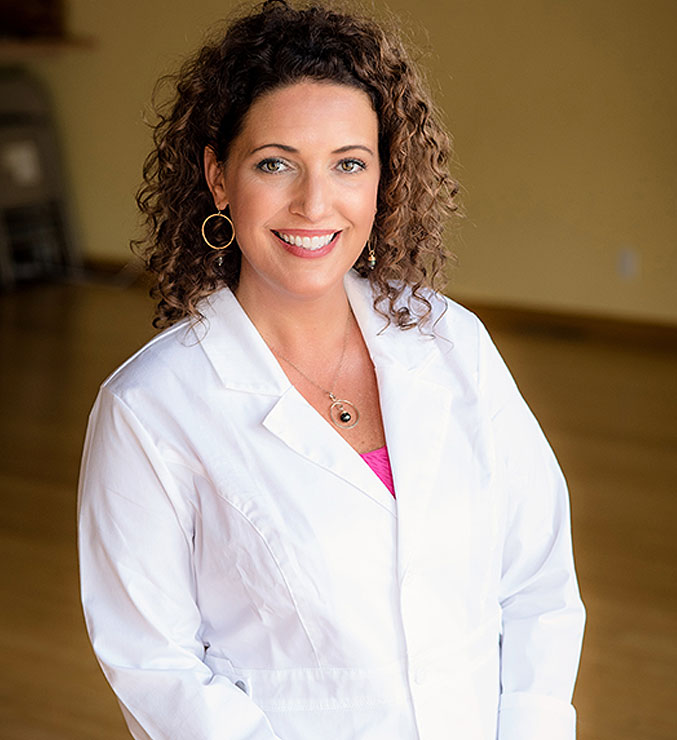
Dr. Dani Brunner has more than 3,500 hours of training and has treated thousands of people over more than ten years. Here’s a quick look at her background:
- Four years of full-time training before ever treating a patient (Oregon College of Oriental Medicine)
- Master’s degree in acupuncture (2012)
- Doctorate in acupuncture and Chinese medicine (2021)
- Special certification in sports-injury treatment (2025)
- Trains with top sports acupuncturists, including the team acupuncturist for the San Francisco 49ers
- Official acupuncturist for the Portland Winterhawks Rosebud Dance Team
A Simple Tip Before You Book Anywhere
Anyone can buy needles. Not everyone has spent years learning how to use them well. Before you let someone needle you — here or anywhere else — it’s fair to ask one simple question: “How many hours of needle training have you had?” With a licensed acupuncturist, you get more than a quick fix for a sore spot. You get someone who looks at your whole body, finds the real cause of the pain, and helps it stay away. That’s the difference you’ll feel at Attunement Wellness.Your most common questions, answered
Does it hurt?
Most people feel just a tiny pinch, then a deep ache as the knot lets go — followed by relief. The needles are about as thin as a hair.
Is it safe?
Yes, especially with a well-trained acupuncturist. The most you’ll usually feel afterward is mild soreness or a small bruise that fades quickly.
Is dry needling the same as acupuncture?
Basically, yes. It uses the same needles to treat muscle knots, which is part of what acupuncture has always done. The main difference is how much training the practitioner has.
What kinds of problems can it help?
Back pain, neck and shoulder pain, tennis or golfer’s elbow, sciatica, heel pain (plantar fasciitis), hip pain, sports injuries, recovery after surgery, and more.
What patients say
Real reviews from verified patients on Google.
EXCELLENT Based on 51 reviews
 Posted on Google
 Maria GuminaI've had such a great experience here! Patrick is a wonderful masseuse and he is very conscientious and careful to make sure you are comfortable and that he is using the right pressure. Great customer service as well from the whole team. Recommended!Posted on Google
 Jillian MoskowitzDr Dani at Attunement is excellent. She helped me when my back was in spasm and I could barely move, it made a huge difference.Posted on Google
 Kathy MaoDR Dani is a very good acupuncturist. She cares about her patients and listens well to them. I feel great after her treatment. I highly recommend her.Posted on Google
 David SimmonsI have been getting massage regularly for years with several very good massage therapists. A few months ago I started using Patrick, and he is absolutely the best! Very professional, very thorough, and has technics that work out every kink while putting you in a very relaxed state!Posted on Google
 Stephanie WomackI was a patient of Dr. Moore's at a different clinic and he was instrumental in helping alleviate pain from a shoulder injury along with chronic headaches and corrected much of the scoliosis I had since I was a kid. I really appreciated his helpful education, creative techniques and interventions, and the fact that he's just a kind, empathetic person that makes me feel comfortable. I moved away from that clinic and wasn't able to return, so finding another chiropractor to treat tendonitis in my wrists and knees that provided the same level of care had proven difficult. I was pretty excited to learn that he had moved to Attunement since it's really close to where I live now. Since working with him again, I have experienced quite a bit of relief from the tendonitis pain and feel like I'm actually doing something about correcting it! I highly recommend Dr. Moore! The clinic itself is also beautiful and in a great location!Posted on Google
 Andrea AngellWent in for neck pain and pain resolved within 24 hours. I’ll continue to see Dr Dani.Posted on Google
 Joseph VossI have been a patient of Dr. Danielle Brunner at Attunement Wellness for several weeks. I was about to give up on finding anyone who could provide relief for an extremely painful neck and shoulder. Dr. Brunner spent a great deal of time with me to explore a treatment plan and care regimen. Through electroacupuncture and cupping therapy she has been able to release extremely tight muscles knots and skeletal posture and is providing much needed and appreciated relief. Dr, Brunner takes a wholistic approach to health and wellness and she has helped me immeasurable through her therapeutic practice.,Posted on Google
 Christina HernandezI have seen many practitioners at Attunement Wellness over the past 5 years and have been so grateful for the care I've received there when learning to manage my chronic pain. My original reason for going in was low back pain but Dr. Dani has helped me understand so much more the issues my body experiences including hormones, gastrointestinal issues, acute injuries, sleep quality, and overall emotional health. All of the providers I've seen here have taken phenomenal care of me, but Dr. Dani, the owner and founder is so knowledgable, kind, communicative, and caring. 10/10 recommend
Ready to Feel Better?
Book your appointment and let an experienced, licensed acupuncturist help you move and feel better.
Sources
Vickers AJ, Cronin AM, Maschino AC, et al. Acupuncture for chronic pain: individual patient data meta-analysis. JAMA Internal Medicine. 2012;172(19):1444-1453. PubMed PMID: 22965186.
Vickers AJ, Vertosick EA, Lewith G, et al. Acupuncture for chronic pain: update of an individual patient data meta-analysis. The Journal of Pain. 2018;19(5):455-474.
Tough EA, White AR, Cummings TM, et al. Acupuncture and dry needling in the management of myofascial trigger point pain: a systematic review and meta-analysis. European Journal of Pain. 2009;13(1):3-10. PubMed PMID: 18395479.
Barber J, Lodo F, Nugent-Head A, Zeng X. Comparative techniques of acupuncture and dry needling. Medical Acupuncture. 2023;35(5):221-229. PMC10606949.